If you’ve ever tried to talk through behavior or feelings with a child who is clearly dysregulated, you already know this truth:
You can’t reason with a nervous system that feels unsafe.
Before kids can reflect, apologize, problem-solve, or even name a feeling, their bodies have to calm first. In our home, especially with the little boys, we’ve learned that regulation doesn’t start with words, it starts with movement, pressure, and rhythm.
That’s where proprioceptive input, vestibular input, and rhythmic integration come in.
These aren’t fancy therapy buzzwords. They’re practical, everyday tools that help kids feel grounded enough to connect again.
What Is Proprioceptive Input?
Proprioceptive input is information the body gets from muscles and joints. It helps kids understand where their body is in space and gives their nervous system a sense of stability and safety.
In simple terms:
It’s deep pressure and resistance, and it’s incredibly calming.
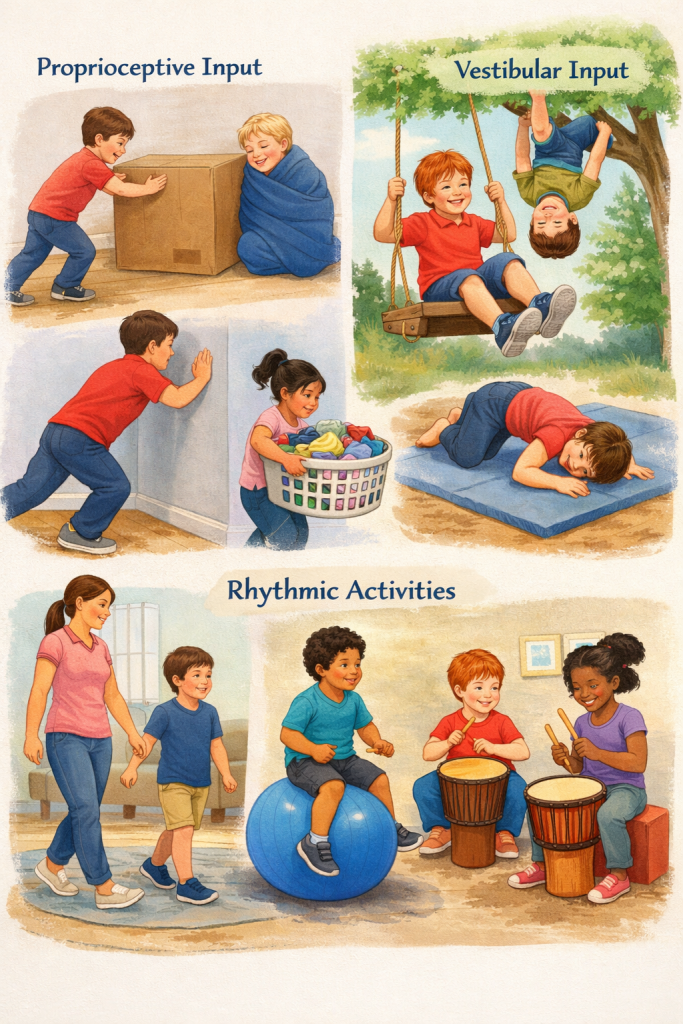
Proprioceptive input looks like:
Pushing, pulling, lifting Carrying heavy objects Tight hugs or squeezing into small spaces Resistance activities
What we do at home:
Carrying laundry baskets or grocery bags Wall push-ups or floor push-ups Pulling a loaded wagon or pushing a heavy box Wrapping up tightly in a blanket burrito
When emotions are high, we’ll often say something like:
“Your body looks like it needs some pushing work before we talk.”
And almost every time it helps.
Understanding Vestibular Input
Vestibular input comes from the inner ear and is connected to balance, movement, and spatial orientation. This system is powerful, and when it’s overstimulated, kids can look wild, impulsive, or out of control.
But when it’s used intentionally?
It can help reset everything.
Vestibular input includes:
Swinging Rocking Spinning (in moderation) Rolling or hanging upside down
How we use it:
Gentle swinging outside or on a sensory swing Rocking back and forth while sitting Somersaults or rolling on the floor Hanging briefly from bars
We’ve learned that slow and rhythmic vestibular input tends to calm, while fast spinning can sometimes escalate, so we watch closely and adjust.
Why Rhythm Matters for Regulation
Rhythmic integration is one of the most overlooked tools in parenting and one of the most effective.
Rhythm helps organize the brain and body. Think about how naturally calming it feels to:
Rock a baby Sway during music Walk at a steady pace
That’s not accidental. Rhythm helps the nervous system feel predictable and safe.
Rhythmic input can be:
Walking together Drumming or clapping Singing Bouncing gently Breathing in a steady pattern
In our house:
Sometimes regulation looks like:
When the boys are dysregulated, we focus first on:
Walking laps around the living room together Counting steps out loud Slow bouncing on an exercise ball Deep breathing while rocking
It doesn’t have to be elaborate — it just has to be steady.
Regulation Comes Before Conversation
One of the biggest shifts we’ve made as parents is this:
We don’t talk about behavior until bodies are calm.
Only after we see calmer breathing, slower movement, and softened tone do we move into conversation.
That’s when kids can:
Identify feelings Talk about what happened Hear accountability without shutting down
It’s not about avoiding consequences, it’s about making sure the child is actually able to process them.
This Is About Connection, Not Control
These tools aren’t about stopping behavior or forcing calm. They’re about helping kids feel safe enough to reconnect with their bodies, their emotions, and the people around them.
And honestly?
They help us regulate too.
When we slow down, move together, and focus on rhythm and pressure, the whole house feels different.
If This Sounds Familiar…
If you’re parenting a child who:
Struggles to calm once escalated Has big reactions to small things Shuts down or explodes when corrected
There is nothing “wrong” with them.
Their nervous system just needs support before it can listen.
🎧 This week’s podcast episode goes deeper into how we use these tools in real moments — not perfect ones.
You can listen here and hear how this plays out in everyday parenting, meltdowns, and repair.
 The Anker Homestead